
Why Reducing Prejudice Starts in a Classroom-4,000 Miles From Sevenoaks
The Dutch historian Rutger Bregman recently delivered his two-part Reith Lecture series on BBC Radio 4. While his focus was on moral decay, it was his earlier book Humankind that inspired the founding of Radnor Junior School in Uganda. That book neatly summarised what we hoped to achieve with a school 4,000 miles away, one charging fees at roughly 1% of those in Sevenoaks.
Although the recent lectures took a sombre view of our world, Humankind explores the inherent goodness and reasonableness in each of us. Bregman examines prejudice through the lens of our early hunter-gatherer ancestors: those who survived learned to approach unfamiliar people with caution to avoid conflict. He argues that echoes of this instinct remain within us today, manifesting naturally as prejudice.
Bregman explains that unconscious bias is inherent in all humans and, not long ago, served as a sensible mechanism for keeping us out of harm’s way. But what struck me most was his argument that prejudice is situational, not fixed. When we stick to homogenous groups or are primed to see others as threats, prejudice increases. When environments encourage cooperation, prejudice falls.
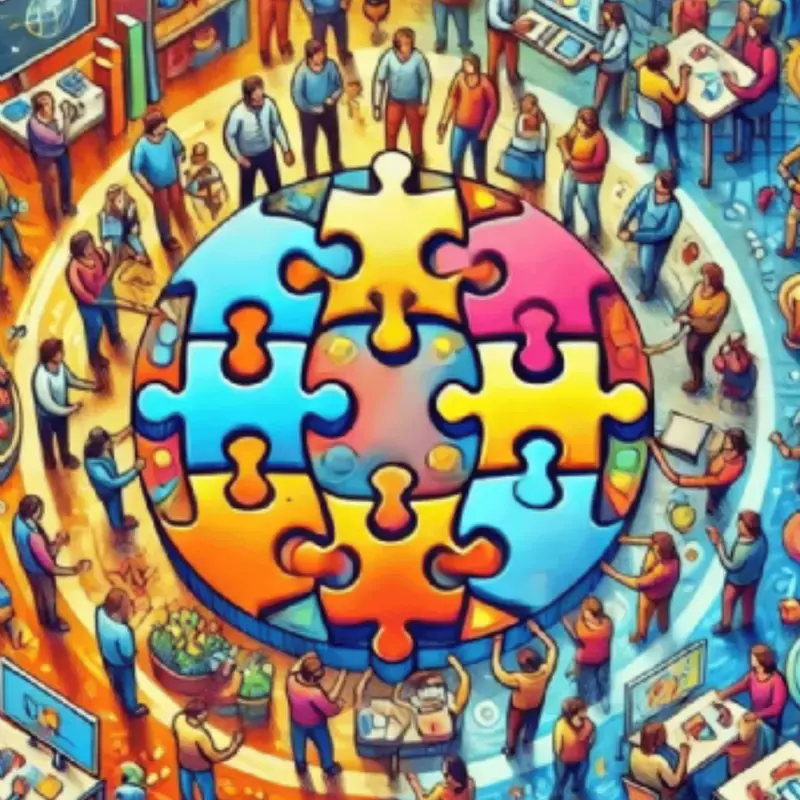
This is not a new idea. The psychologist Gordon Allport coined the “contact hypothesis” in the 1950s, arguing that prejudice decreases when groups have meaningful, positive interactions. Why? For all the reasons you might expect: it humanises others, breaks down stereotypes, builds empathy and creates shared goals.
This is the scientific underpinning for why we decided to open a school in Uganda. When British pupils and Ugandan pupils meet, learn, laugh, play and work together—even briefly—they engage in one of the most powerful mechanisms known for reducing prejudice. Our pupils are reminded that visits to the school are a privilege; they are not “volunteering” for anything, and both groups are meeting, as far as possible, as equals. A link with Radnor Junior School in Semuto, Uganda is not just partnership - it is contact, and therefore education in its deepest form.