
Why Play Matters More Than Ever in Today’s Busy World
Research published this month by the National Literacy Trust and KPMG highlights a significant fall in play and interaction between young children and parents since 2019. In a survey of over 3,000 parents, only 51.6% said they played with their children every day, which is down by a third in seven years. The other key finding was that parents reading with children daily has fallen by 30% and now stands at just 45.9%. Even a task as simple as chatting with children seems to have declined considerably. Many parents paint a picture of a very different childhood to the one many of us grew up with.
What is impacting these numbers, what might it mean for children, and what can we do about it?
Changes in working patterns and a general lack of time seem to be the most significant factors identified by parents. Almost half of all respondents cite extended working days and busy family schedules as leaving them without the time and energy to engage with their children as we once did. In its place, technology is regularly being called upon to bridge the gap.
Having spent a lifetime in education, it is increasingly clear to me that children have a set of unwritten but vital developmental milestones which cannot easily be achieved later if missed. Child development in the first five years of life happens incredibly rapidly. By the time children start formal schooling around age 4 or 5, they have gone through thousands of hours of learning and conditioning. This results in problem solving and focus skills, self regulation and empathy, communication and language building, alongside motor skills and independence.
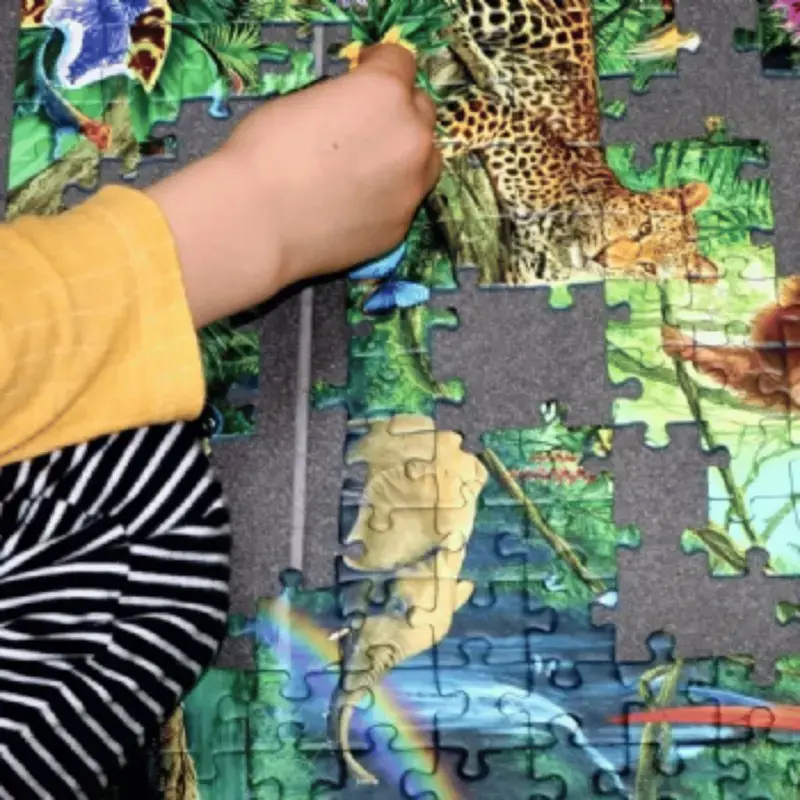
All of these skills are acquired through play. We do not teach them formally because they are learnt through doing. Parents are their first teachers. They introduce the world around them and encourage them to experiment. In doing so, children acquire the basic building blocks necessary for school and therefore life.
Rolling this forward into school, the annual survey on school readiness prepared by Kindred Squared shows a worrying downward trend. Fewer young children are arriving school-ready by the age of 4 or 5. This has a long term impact on their ability to get the most out of school, and studies are starting to show a lasting impact on academic progress and ability.
So, what can we do now? I am a strong believer in the power of three, and perhaps the following will help to prime the pumps for parental power:
Talk and Read
Engage in daily conversations and read together to naturally build the vocabulary and listening skills your child needs for the classroom.
Play and Do
Provide time every day for independent play without screens so they can practise problem solving and develop their executive function.
Just Say No
Enforce clear daily rules with empathy to help them build emotional regulation and understand how to follow routines.
Ultimately, the message is a simple one. In a world that feels increasingly busy and digitally driven, it is the small, consistent moments of connection that matter most. Talking, reading and playing with our children may feel ordinary, but they are anything but. They form the foundation on which confidence, curiosity and a lifelong love of learning are built.