
The Attendance Crisis: The Hidden Cost of Modern Parenting
School absence figures released shortly before Christmas by the Centre for Social Justice paint a worrying picture of attendance in Britain’s schools. Comparing current data with pre-Covid levels, severe absence, defined as children missing more school than they attend, rose by a staggering 167%. Equally, overall absence showed a 40.5% increase since the pandemic.
These are concerning statistics, and the independent sector is not immune as overall rates of absence here have also ticked up in the past five years. Assuming children are biologically the same as they were in 2019, and it’s safe to assume they are not significantly unwell, what has happened and what can be done about it?
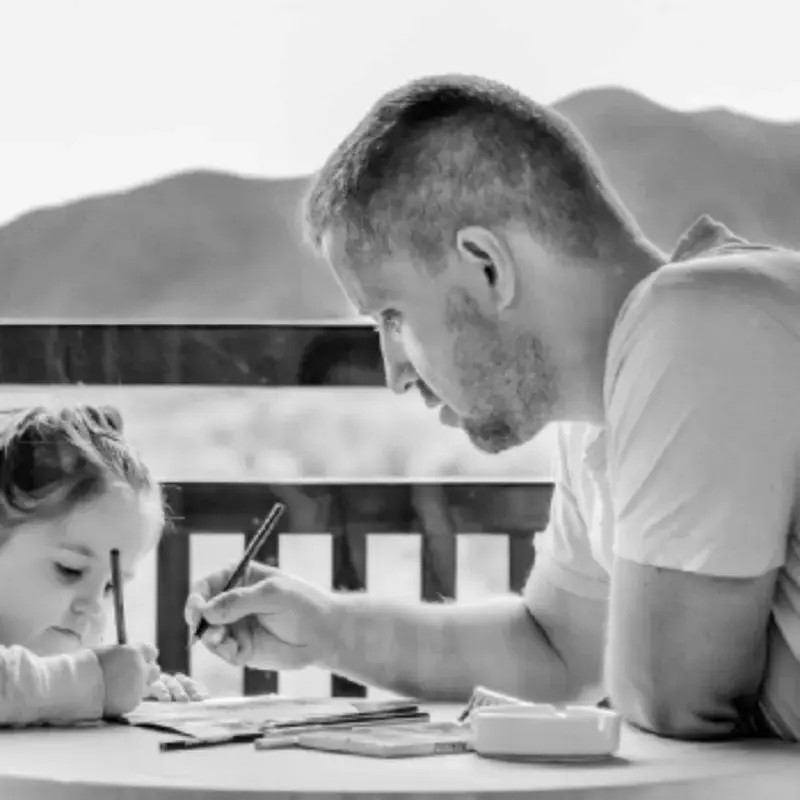
I am increasingly certain that modern parenting habits are inadvertently undermining children’s ability to develop. The striking thing is that most parents today care deeply about their children, they want the best for them and want to protect them from harm. Parents today are sensitive to every variation in mood, outlook, and emotion to a level which in past decades would have been unheard of. Good intentions have also gone digital, as parents use tracking devices to keep tabs on every movement. This type of ‘intensive’ parenting is new, humans have never reared their offspring in this way before.
The shift is undeniable in the data. Since 1971, the percentage of primary-aged children walking to school has plummeted from 86% to 25%. The data is even starker regarding independent travel: in 1990, roughly 30% of children under 10 were allowed to go places alone, today, that figure is virtually zero. We have witnessed the extinction of the ‘free-range’ childhood, replaced by the ‘intensive’ parenting of today.
But this isn't just about traffic or walking, it is about a fundamental shift in the parent-child contract. We have moved from a model of ‘benign neglect’, where children were expected to amuse themselves, resolve their own squabbles, and navigate their own risks, to a model of total supervision.
In our desire to be sensitive to every variation in our children's mood, we have accidentally taught them that discomfort is a threat rather than a teacher. By monitoring their location and intervening the moment they signal distress, we deny them the essential experience of being stuck, being bored, or being unhappy, and realising they can survive it.
If we want to reverse the trend of absenteeism, we must look closer to home. Resilience is like a muscle; it only grows when it is tested. Every time we drive our children when they could walk, every time we intervene in a friendship dispute they could solve, and every time we accept ‘I can't’ without a gentle push, we are causing that muscle to atrophy.
We need to be brave enough to retreat. We need to be prepared to withstand their temporary unhappiness for the sake of their long-term robustness. It is time to give children back their freedom, the freedom to use public transport, the freedom to make mistakes, and importantly, the freedom to face a difficult day and discover they are strong enough to get through it.